Call Us:-+8613175696608

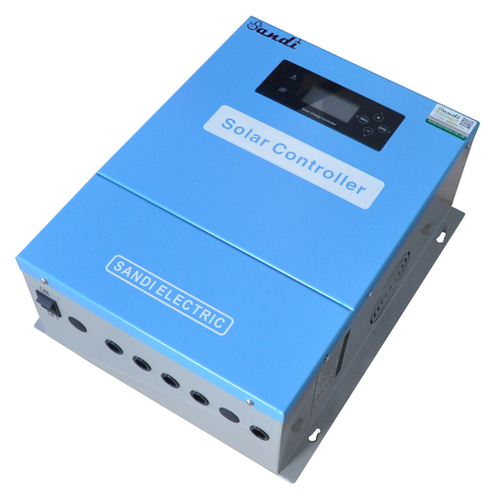
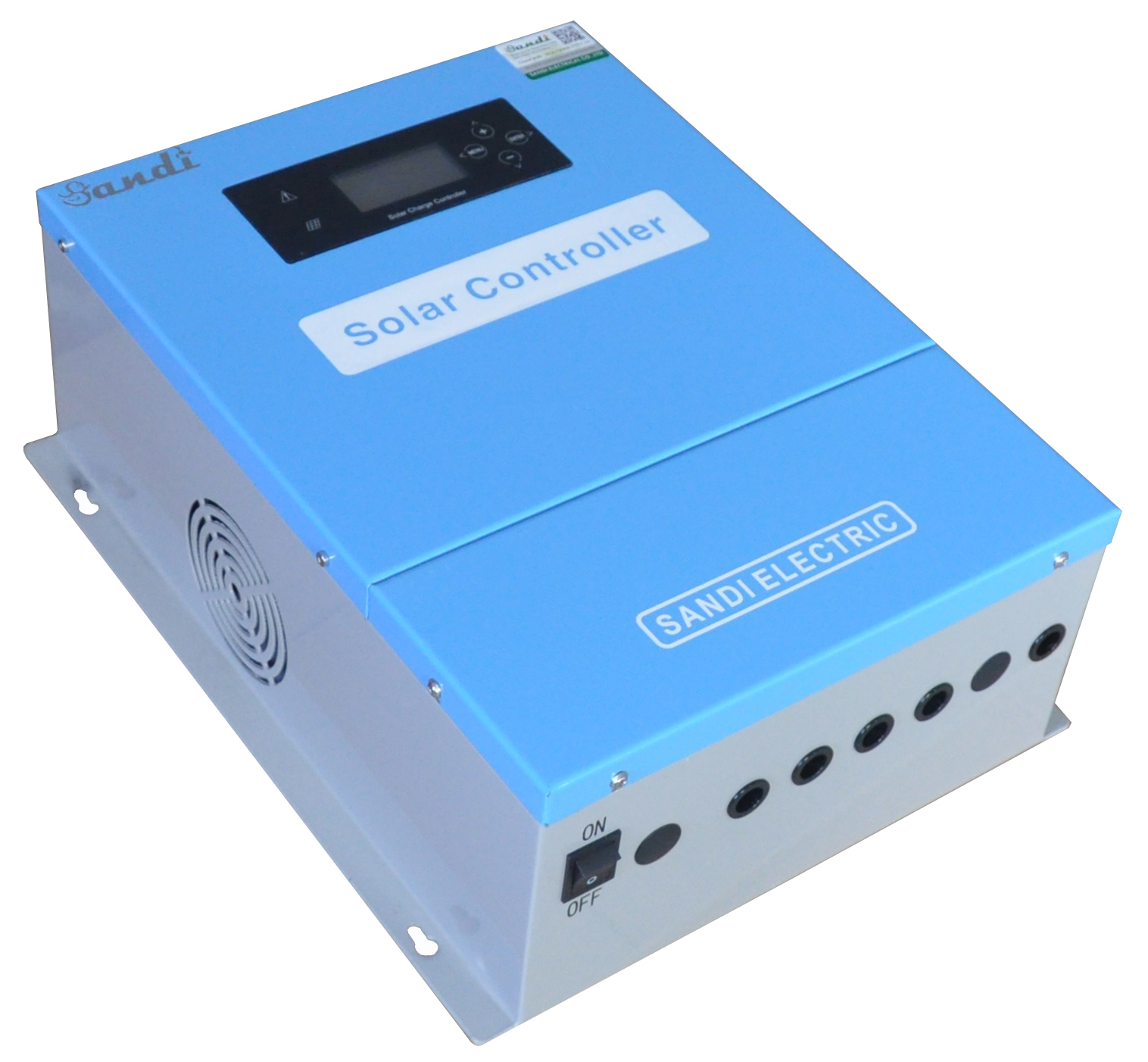
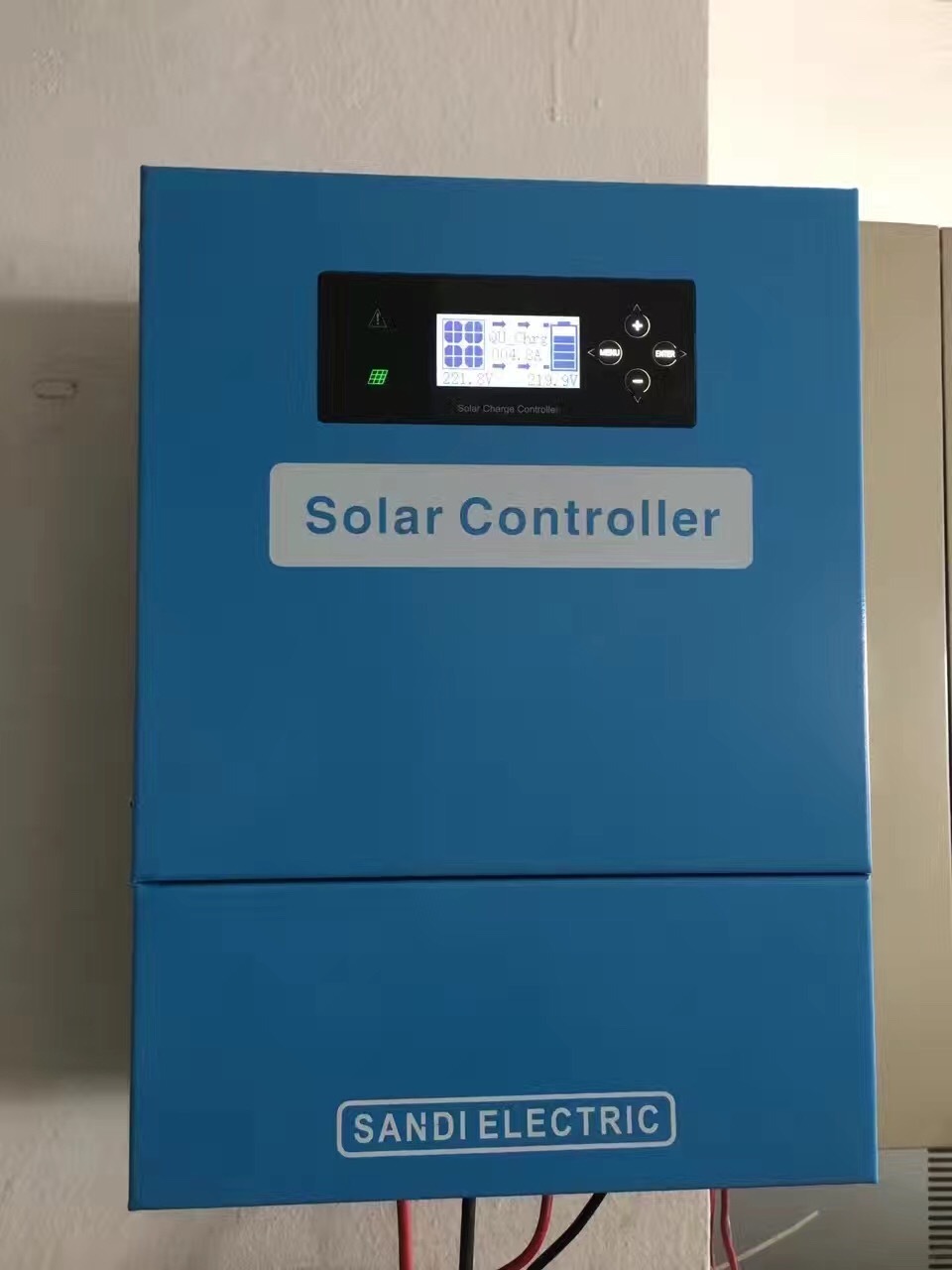
240 V Solar PV Charge Controller
4900.00 - 5500.00 USD ($)
Product Details:
- Efficiency Greater than 95%
- Features LED Indicators, Automatic Switching, Reverse Polarity Protection, Overload Protection, Short Circuit Protection
- Product Type Solar PV Charge Controller
- Material Metal Body with ABS Plastic Panel
- Power 1000 W
- Max Voltage 240 V
- Max System Voltage 300 V
- Click to view more
X
240 V Solar PV Charge Controller Price And Quantity
- 4900.00 - 5500.00 USD ($)
- 1 Piece
- IP21
- 50/60 Hz
- Up to 40A
- Resistive & Inductive Loads Supported
- Digital Display
240 V Solar PV Charge Controller Product Specifications
- 3.2 kg
- 240 V
- 300 V
- LED Indicators, Automatic Switching, Reverse Polarity Protection, Overload Protection, Short Circuit Protection
- 262 mm x 212 mm x 88 mm
- Wall Mount
- Standard
- Microcontroller Based
- 1 m
- 1000 W
- PWM (Pulse Width Modulation)
- Home, Office, Industrial, and Agricultural Solar Systems
- 240 V AC
- Black & Blue
- Metal Body with ABS Plastic Panel
- Greater than 95%
- Solar PV Charge Controller
- IP21
- 50/60 Hz
- Up to 40A
- Resistive & Inductive Loads Supported
- Digital Display
240 V Solar PV Charge Controller Trade Information
- Ningbo/Shanghai
- Letter of Credit at Sight (Sight L/C), Western Union, Paypal, Telegraphic Transfer (T/T)
- 6000 Piece Per Month
- 7 Days
- Yes
- Contact us for information regarding our sample policy
- Packing of 240V PV Charge Controller is standard export honeycomb cartoon
- CE(EMC&LVD), SAA(AS4777&AS3100), G83, G59, VDE ARN 4105, UL1741, CSA22.2, ISO9001
Product Description
Solar Charge Controller 240V
Application area
- For desolate area like mountain, island, pasturing area, etc.
- For transportation system like beacon light, traffic light, street light, etc.
- For communication system: unattached operation microwave middle station, optical cable maintenance station, etc.
- For lighting power like garden lamp, street light, etc.
- For photovoltaic power station, wind-solar power station, park charging station, family power house, factory power station, etc.
- For solar building: has good business future.
- For the new technology application project.
Specifications:
- Low running cost due to the usage of multistep sequential limiting current method which controls the solar array connection as well. It also has the option of getting shut off based on voltage change tendency
- Each circuit is offered along with individual killer switch and multiple circuit charging control
- Exigencies like over charge, electronic short circuit, anti-rever protection can be easily controlled with the help of auto protection function provided. It also ensures reverse charging to the solar panel array during nights.
- Crystal clear LCD screen can be used to see the working status of solar panels, controller and battery.
- Sampling circuit is entirely remote from power switch driving circuit. Opto isolation is used to transmit the control signals along with great stability and high disturbance rejection.
- In order to protect the equipment from any kind of lightening surge; we have ensured to include a protection device within the controller. It helps to limit the over voltage from entering the solar panels beyond what system could resist
- We use industrial grade chips for all controls to ensure they can withstand all weather i.e. cold, hot or humid conditions.
- System can adjust to different temperature with the help of temperature compensation function due to variable battery types.
- RS-232, RS-485, USB, GPRS, Ethernet can use the communication solution offered by us.
Technical parameter:
| Model | SDC96V 50A/60A | SDC120V 50A/60A | SDC192V 50A/60A | SDC240V 50A/60A | |
| Matched battery group | 96V | 120V | 192V | 240V | |
| Rated current of solar panel | 50A/60A | 50A/60A | 50A/60A | 50A/60A | |
| Maximum voltage of solar panel | 176V | 220V | 352V | 440V | |
| Maximum power of solar panel | 4800W/5760W | 6KW/7.2KW | 9.6KW/11.52KW | 12KW/14.4KW | |
| Solar panel group quantity | 2 circuits | 2 circuits | 2 circuits | 2 circuits | |
| Rated current of each solar panel | 25A/30A | 25A/30A | 25A/30A | 25A/30A | |
| Method of working | Working continuously | ||||
| Function | Charging and control | ||||
| State display | LCD
| ||||
|
| IP30 | ||||
| Operating environment | Temperature:-10-40 oC Humidity 80% | ||||
| Solar panel group stop charging voltage | 116V+2 | 145V+2 | 235V+2 | 290V+2 | |
| Solar panel group recharging voltage | 110V+2 | 135V+2 | 216V+2 | 270V+2 | |
| Integrated battery connection cable | 10mm2/12mm2 | ||||
| Max itself power consumption without load | 300mA | ||||
| Voltage drop between solar panel and battery | 2V | ||||
| Applicable altitude | 1000 m | ||||
| Product size | 520x430x220mm | ||||
| Weight | 18Kg | ||||
Advanced Digital Control for Optimal Solar Management
The integrated microcontroller and digital display provide precise control and instantaneous feedback on charging status, system voltage, and load conditions. Its PWM switch mode maximizes battery life and charging efficiency while allowing users to monitor their system at a glance. This ensures peak performance and peace of mind for installations across a variety of locations.
Robust Design for Safety and Durability
Encased in a metal body with an ABS plastic panel and finished in black and blue, this charge controller meets IP21 protection standards. Its engineered for safety with multiple automatic protections against reverse polarity, overload, and short circuits. LED indicators and automatic switching enhance operational efficiency, which makes maintenance straightforward.
Versatile Applications with Reliable Performance
With compatibility for resistive and inductive loads, this controller is suitable for residential, commercial, industrial, and agricultural solar power solutions. Wall-mount installation and a standard compact size make integration simple. Its high efficiency and 1000 W capacity provide robust energy management across varied environments.
FAQs of 240 V Solar PV Charge Controller:
Q: How does the 240 V Solar PV Charge Controller enhance solar system efficiency?
A: The controller utilizes PWM (Pulse Width Modulation) technology and a high-efficiency microcontroller to optimize charging and safeguard your batteries, resulting in energy conversion rates above 95%. Its digital display enables users to track system status and make informed adjustments for maximizing efficiency.Q: What types of loads can be connected to this charge controller?
A: This controller is designed to support both resistive and inductive loads, making it suitable for a wider range of devices and appliances commonly used in homes, offices, industries, and agriculture.Q: Where can I install this charge controller, and what installation type does it support?
A: The controller is built for versatile use in home, office, industrial, and agricultural settings across India. It is designed for wall mounting, providing a space-efficient and secure installation option for various environments.Q: When and how should I use the automatic protection features?
A: The devices automatic protection featuresincluding reverse polarity, overload, and short circuit protectionare always active, requiring no manual intervention. These safeguards operate seamlessly to protect your equipment during normal use and unforeseen events.Q: What is the process for monitoring system performance and making adjustments?
A: The digital display and LED indicators allow users to monitor current charging status, output voltage, and error states. Adjustments can be made based on real-time feedback, ensuring responsive management and maintenance of optimal system performance.Q: What are the key benefits of deploying this charge controller in my solar system?
A: Key benefits include high efficiency (over 95%), broad load compatibility, robust safety features, digital monitoring, and easy integration into existing solar setups. These advantages contribute to system reliability, easier management, and longer equipment lifespan.Tell us about your requirement

Price:
Quantity
Select Unit
- 50
- 100
- 200
- 250
- 500
- 1000+
Additional detail
Mobile number
Email

Other Products in 'Solar Charge Controller' category


ZHEJIANG SANDI ELECTRIC CO.,LTD
Contact Details

- Building 13-2 Botong Huigu, No. 66 Binhai South Four Road, Yueqing Economic Development Zone, Yueqing - 325604, Zhejiang, China
- Phone : 86-577-62776918

- Ms Carrie Lu (Foreign Trade Manager)
- Mobile : +8613175696608
- Send Inquiry
 Send Inquiry
|


ZHEJIANG SANDI ELECTRIC CO.,LTD
All Rights Reserved.(Terms of Use)
Developed and Managed by Infocom Network Private Limited.
Developed and Managed by Infocom Network Private Limited.

