Call Us:-+8613175696608

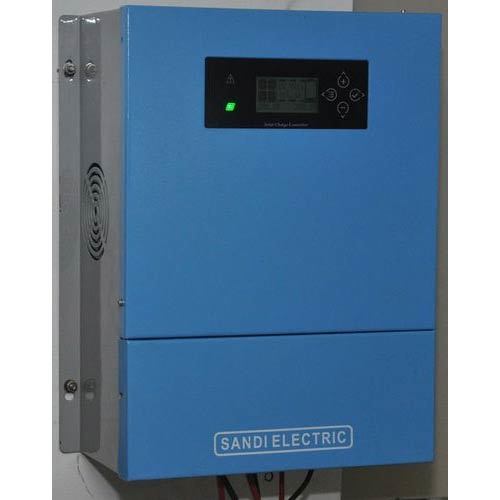
LCD Solar Charge Controller
4900.00 - 5500.00 USD ($)
Product Details:
- Features Overload protection, LCD display, Short Circuit Protection, USB Output
- Efficiency > 98%
- Maintenance Type Low Maintenance
- Input Voltage 12V/24V DC
- Product Type LCD Solar Charge Controller
- Material ABS Plastic Housing
- Number of Cells Supports 1-2 Battery Banks
- Click to view more
X
LCD Solar Charge Controller Price And Quantity
- 1 Piece
- 4900.00 - 5500.00 USD ($)
- Boost, Float
- Lead Acid, Gel, AGM
- 5V DC, 2A
- Digital LCD Display
- 0~95% RH Non-condensing
- Screw Terminal Block
- Built-in Memory for Parameters
- < 10mA
- Automatic Low Voltage Disconnect
- Screw Mounting Holes
LCD Solar Charge Controller Product Specifications
- Standard Compact
- 12V/24V DC
- 10A, 12V/24V Automatic
- LCD Solar Charge Controller
- -35C to +60C
- PWM (Pulse Width Modulation)
- > 98%
- 12V/24V DC
- Microcontroller-based
- Low Maintenance
- 50V DC
- As per requirement
- Small Solar Home Systems, Solar Street Lighting
- Overload protection, LCD display, Short Circuit Protection, USB Output
- 24V DC
- Wall or Panel Mountable
- approximately 150mm x 78mm x 35mm
- Black with Blue Display
- Supports 1-2 Battery Banks
- approx. 250g
- ABS Plastic Housing
- Boost, Float
- Lead Acid, Gel, AGM
- 5V DC, 2A
- Digital LCD Display
- 0~95% RH Non-condensing
- Screw Terminal Block
- Built-in Memory for Parameters
- < 10mA
- Automatic Low Voltage Disconnect
- Screw Mounting Holes
LCD Solar Charge Controller Trade Information
- Ningbo/Shanghai
- Letter of Credit at Sight (Sight L/C), Telegraphic Transfer (T/T), Western Union, Paypal
- 6000 Piece Per Month
- 7 Days
- Yes
- Contact us for information regarding our sample policy
- Packing of Solar Charge Controller 48V is strong honeycomb carton
- All India
- CE(EMC&LVD), SAA(AS4777&AS3100), G83, G59, VDE ARN 4105, UL1741, CSA22.2, ISO9001
Product Description
MPPT Solar Charge Controller 48V 80A/100A/200A with LCD display and RS232/RS485
Introduction
MPPT solar controller can sense the generated voltage of solar panels real-timely as well as track the Max voltage and current values (VI) to make the system charge the batteries with the highest efficiency always.
It is applied for solar power energy system to adjust the work of solar cells, battery bank and loads, it is one of the key parts of the whole solar power system.
SSMC MPPT series controller is a new generation product which adopt DSP controlling technology, this new controller increases LCD display, standard RS232/485 communication interface, adopts modular design, easy for installation and expansion.
Performance Features:
- Adopting the high efficient MOSFET of IR company
- Adopting the high performance DSP manufactured by Microchip company
- Optimized control algorithm improves the dynamic response of the system output, can swiftly track the Max power point of solar cells, also the innovation technology of the Max power point tracking technology can significantly improve the utilization rate of the solar power energy system, The battery charging process of the controller has been optimized, which can prolong the service life of battery as well as improve the system performance extremely.
- LCD display multilevel menu, display contents: Real time parameters, quantity of state, fault query, priority setting, language setting
- Communication interface: RS-232/485, support MODBUS treaty, The RS485/RS232 interface of the controller provide the choice for monitoring the running state of the whole PV power system.
- With high anti-interference capacity.
- The comprehensive self-testing function and electronic protect function can avoid the controller damage due to wrong installation and system fault.
- Protection function: PV input anti connection, battery anti-connection, night adverse current resistant, battery overcharge resistant, battery under voltage alarm, battery over temperature alarm.
Specifications:
| Model | SSMC48-150A | SSMC48-200A | SSMC48-250A |
| Rated Voltage (VDC) | 48V | ||
| Rated power of solar panels (KWp) | 7.2KW | 9.6KW | 12KW |
| Rated charge current(A) | 150A | 200A | 250A |
| PV open circuit voltage range(V) | 73.8-190V | ||
| PV charging ways | MPPT | ||
| MPPT operating voltage range | 57.6V~148.2V | ||
| PV input points | 2 | 3 | |
| Static losses | <10mA(48VDC) | ||
| Charging circuit voltage drop | <0.7V | ||
| Battery management mode | Three stages of promotion, absorption, floating | ||
| Temperature compensation (optional) | -30mV/oC (Based on 25oC) | ||
| Charging constant-current accuracy | 5% | ||
| Voltage ripple coefficient | 1% | ||
| Current ripple coefficient | 1% | ||
| Efficiency | >97%(full operation) | ||
| Display | sound-light alarm+LCD display (or communication monitor) | ||
| Protection | PV input anti-connecting, battery anti- connecting, Night adverse current resistant, battery overcharge & under voltage alarm, Battery over temperature alarm | ||
| Communication | RS485/RS232,GPRS,Ethernet | ||
| Cooling way | air cooling | ||
| Protection degree | IP30 | ||
| Working temperature | -10oC~+50oC | ||
| Storing temperature | -20oC~+70oC | ||
| Humidity | <95% | ||
| Elevation(m) | <2000m 100% | ||
Reliable Solar Charging with Advanced Protection
Equipped with automatic low-voltage disconnect and built-in overload protection, this solar charge controller delivers safe and sustained energy management for your system. The microcontroller-based design ensures precise charging modes including Boost and Float for enhanced battery lifespan and system stability.
Intuitive Digital LCD Display
Monitor vital system parameters on the vivid LCD screen, enabling easy setup, control, and troubleshooting. The controller provides real-time updates on voltage, charging status, and battery health, ensuring consistent oversight and simplified maintenance.
Versatile Application and Easy Installation
Ideal for small home solar setups and street lighting, the controller features a compact form factor and wall or panel mounting options. Secure connections through screw terminal blocks and customizable cable lengths make installation straightforward and reliable, accommodating varied project requirements.
FAQs of LCD Solar Charge Controller:
Q: How do I install the LCD solar charge controller in a home solar system?
A: Installation is simple: use the screw mounting holes to affix the controller to your wall or panel, and connect wires via the screw terminal block. Ensure the input voltage is 12V/24V DC and follow the included wiring guide for optimal results.Q: What types of batteries are supported by this charge controller?
A: This controller supports lead acid, gel, and AGM batteries, maximizing compatibility for different solar systems and providing safe and efficient charging modes.Q: When should I use the Boost and Float charging modes?
A: Boost mode is typically used for bulk charging when batteries need to replenish energy quickly, while Float mode maintains battery charge after reaching full capacity, preventing overcharging and prolonging battery life.Q: Where can this charge controller be used?
A: Its designed for small solar home systems and solar street lighting, but can be installed in any suitable environment within its operating temperature range (-35C to +60C) and humidity limits (0~95% RH non-condensing).Q: What process does the controller use to protect my batteries from over-discharge?
A: The controller automatically disconnects the load when battery voltage drops to a low level, employing low voltage disconnect to prevent battery damage and maintain system reliability.Q: How does the USB output function on this controller?
A: The controller provides a 5V DC, 2A USB output, enabling you to conveniently charge mobile devices directly from your solar system without needing separate adapters.Q: What benefits does using a microcontroller-based, PWM solar charge controller bring to my system?
A: With PWM technology and microcontroller regulation, the controller achieves over 98% efficiency, reducing energy loss, improving battery lifespan, and offering advanced features like data storage for operating parameters and real-time monitoring via the LCD display.Tell us about your requirement

Price:
Quantity
Select Unit
- 50
- 100
- 200
- 250
- 500
- 1000+
Additional detail
Mobile number
Email

Other Products in 'Solar Charge Controller' category


ZHEJIANG SANDI ELECTRIC CO.,LTD
Contact Details

- Building 13-2 Botong Huigu, No. 66 Binhai South Four Road, Yueqing Economic Development Zone, Yueqing - 325604, Zhejiang, China
- Phone : 86-577-62776918

- Ms Carrie Lu (Foreign Trade Manager)
- Mobile : +8613175696608
- Send Inquiry
 Send Inquiry
|


ZHEJIANG SANDI ELECTRIC CO.,LTD
All Rights Reserved.(Terms of Use)
Developed and Managed by Infocom Network Private Limited.
Developed and Managed by Infocom Network Private Limited.

