Call Us:-+8613175696608

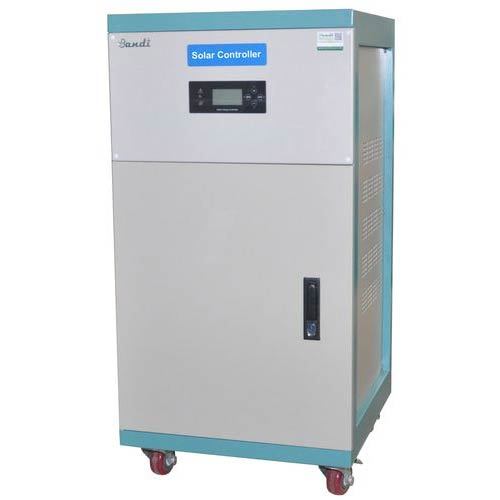
384V, 100A - 250A Solar Charge Controller
4900.00 - 5500.00 USD ($)
Product Details:
- Maintenance Type Low maintenance
- Efficiency 98%
- Features Intelligent charge control, LCD display, Communication interface, Overcharge and over-discharge protection, Automatic temperature compensation, Multiple protection functions
- Input Voltage Up to 450V DC
- Product Type Solar Charge Controller
- Material ABS + Metal
- Number of Cells Suitable for large multi-cell systems
- Click to view more
X
384V, 100A - 250A Solar Charge Controller Price And Quantity
- 1 Piece
- 4900.00 - 5500.00 USD ($)
- 0~95% RH (non-condensing)
- Short circuit, Overvoltage, Reverse polarity, Overload, Over-temperature protection
- LCD Display with status indicators
- Built-in cooling fan / Air cooled
- Lead Acid, Lithium, Gel, AGM, Custom (as specified)
- 100A - 250A
- RS485 / CAN (Model dependent)
- -20C to 70C
- 1% of rated capacity
384V, 100A - 250A Solar Charge Controller Product Specifications
- MPPT/PWM Control Technology
- 98%
- PWM / MPPT (Model dependent)
- Customizable / As per requirement
- Suitable for large multi-cell systems
- Approx. 19 kg
- Approx. 620 x 310 x 160 mm
- -10C to 50C
- Up to 450V DC
- 384V
- Grey / Black
- Wall-mounted / Panel-mounted
- ABS + Metal
- Low maintenance
- Large form factor industrial controller
- Up to 96 kW (depending on current rating)
- Solar Charge Controller
- Up to 450V DC
- Solar Power Plants, Industrial Solar Installations, Large Scale Photovoltaic Systems
- 384V DC
- Intelligent charge control, LCD display, Communication interface, Overcharge and over-discharge protection, Automatic temperature compensation, Multiple protection functions
- 0~95% RH (non-condensing)
- Short circuit, Overvoltage, Reverse polarity, Overload, Over-temperature protection
- LCD Display with status indicators
- Built-in cooling fan / Air cooled
- Lead Acid, Lithium, Gel, AGM, Custom (as specified)
- 100A - 250A
- RS485 / CAN (Model dependent)
- -20C to 70C
- 1% of rated capacity
384V, 100A - 250A Solar Charge Controller Trade Information
- Ningbo/Shanghai
- 6000 Piece Per Month
- 7 Days
- Yes
- Contact us for information regarding our sample policy
- Packing of Solar Charge Controller 384V is strong honeycomb carton
- Australia, North America, Eastern Europe, Africa, Western Europe, Middle East, South America, Asia, Central America
- All India
- CE(EMC&LVD), SAA(AS4777&AS3100), G83, G59, VDE ARN 4105, UL1741, CSA22.2, ISO9001
Product Description
384V Solar Charge Controller, 100A - 250A Solar Charge Controller Off-framework Solar energy formation system comprising sun based board range, solar charge regulator, off-grid inverter, PV combiner box, battery group and many more. In the daylight, our product converts solar power to DC power and charge the battery group through the charge regulator. Besides, it also converts the DC energy to AC power for loading by off-grid inverter. In order to meet various energy stations' requirement, there are 48V, 120V, 220V, 360V, 24V, 96V, 192V, 240V, 480V and other ordinary sequences current base grounded on various battery current of off-grid PV energy station system extend.
What Are The Functions Of Our Product?
- Our solar charge controller 384V 150A/250A/100A/200A embraces multi-stage consecutive restricting voltage charge technique, shut off orderly in compliance with the battery group current transformation potential or mechanical regulate various solar range connection.
- With auto security capacity of over charge, anti-reverse safety and electronic short circuit safety and many more are incorporated in our product.
- The wide screen LCD,unmistakably show the operating condition of the solar panel, regulator and battery. (current, battery changing current, charging power, solar voltage, power display, voltage and power display)
- Multi-work meter demonstrates the battery current, the charging power, grand total amount of electricity and the charging current.
- Control switch driving circuit is totally disconnected from inspecting circuit. The regulation signals are transported by opto disengagement, with an elevated disturbance dismissal and soundness.
- All the control embraces mechanical review chips, which can operate ordinarily in hot, humid and cold environ.
- Extra-charge safety, damage protection and reverse polarity safety of battery group.
- Our solar charge controller 384V 150A/250A/100A/200A avert the battery class back charging to the sun panel range during the evening.
- Integrated lightning insurance instrument in the regulator. Constrain momentary excess current, which takes entry in sunlight based panels inside a system or device can tolerate current range or empty the solid lightning voltage into the surface. To shield the instrument from damaged and lightning surge.
Advanced Intelligent Charging
Utilizing MPPT or PWM control technology, the 384V solar charge controller automatically manages charging cycles to optimize battery life and energy capture. Features like temperature compensation and automatic overcharge/discharge protection ensure efficient and safe operation for a wide variety of large-scale applications.
Comprehensive Protection & Reliability
Engineered for safety and long-term operation, this controller offers an extensive array of protection functions, including short circuit, overvoltage, reverse polarity, overload, and over-temperature defense mechanisms. The built-in cooling system maintains optimal temperatures, providing reliable performance in harsh industrial environments.
Versatile Communication & User Interface
With model-dependent RS485 or CAN communication interfaces, this controller integrates seamlessly with monitoring and automation systems. The large LCD display and status indicators provide clear real-time information, making diagnostics and status tracking straightforward for operators and maintenance teams.
FAQs of 384V, 100A - 250A Solar Charge Controller:
Q: How does the controller optimize charging for different battery types?
A: The 384V solar charge controller is compatible with lead acid, lithium, gel, AGM, and custom battery configurations. It uses intelligent MPPT or PWM technology (model dependent) to automatically adapt charging cycles, safeguarding battery health and enhancing storage efficiency.Q: What protection features are integrated into this charge controller?
A: It incorporates comprehensive protection functions including short circuit, overvoltage, reverse polarity, overload, and over-temperature safeguards. These built-in measures ensure safe operation and help prevent damage to both the controller and connected battery systems.Q: When should I choose MPPT or PWM control technology?
A: MPPT (Maximum Power Point Tracking) is best for maximizing energy harvest, especially in environments with variable sunlight. PWM (Pulse Width Modulation) is suitable for simpler setups and consistent solar input. The selection depends on your installations size, location, and energy optimization needs.Q: Where can the controller be installed, and what mounting options are available?
A: This large form factor controller can be wall-mounted or panel-mounted, making it suitable for electrical rooms, control panels, or direct integration into industrial solar plant infrastructure. The robust design supports flexible placement in various environments.Q: What process is involved in monitoring system status and performance?
A: Operators use the integrated LCD display with status indicators for real-time monitoring. For advanced diagnostics and system integration, the RS485 or CAN communication interface allows connection to monitoring software or control platforms for remote access and data logging.Q: How does the built-in cooling system benefit overall performance?
A: The adaptive cooling methodeither a built-in fan or air-cooled, as per modelmaintains optimal operating temperature, supporting efficient power conversion, extending component life, and ensuring reliable high-current operation under continuous load.Q: What advantages does this controller offer for industrial solar installations?
A: This controller delivers high efficiency (98%), robust protection functions, flexible battery compatibility, low self-consumption, and seamless integration. These features provide reliable operation, reduced downtime, and ease of maintenance, making it a valuable solution for solar power plants and large-scale PV systems.Tell us about your requirement

Price:
Quantity
Select Unit
- 50
- 100
- 200
- 250
- 500
- 1000+
Additional detail
Mobile number
Email

Other Products in 'Solar Charge Controller' category




ZHEJIANG SANDI ELECTRIC CO.,LTD
Contact Details

- Building 13-2 Botong Huigu, No. 66 Binhai South Four Road, Yueqing Economic Development Zone, Yueqing - 325604, Zhejiang, China
- Phone : 86-577-62776918

- Ms Carrie Lu (Foreign Trade Manager)
- Mobile : +8613175696608
- Send Inquiry
 Send Inquiry
|


ZHEJIANG SANDI ELECTRIC CO.,LTD
All Rights Reserved.(Terms of Use)
Developed and Managed by Infocom Network Private Limited.
Developed and Managed by Infocom Network Private Limited.

